

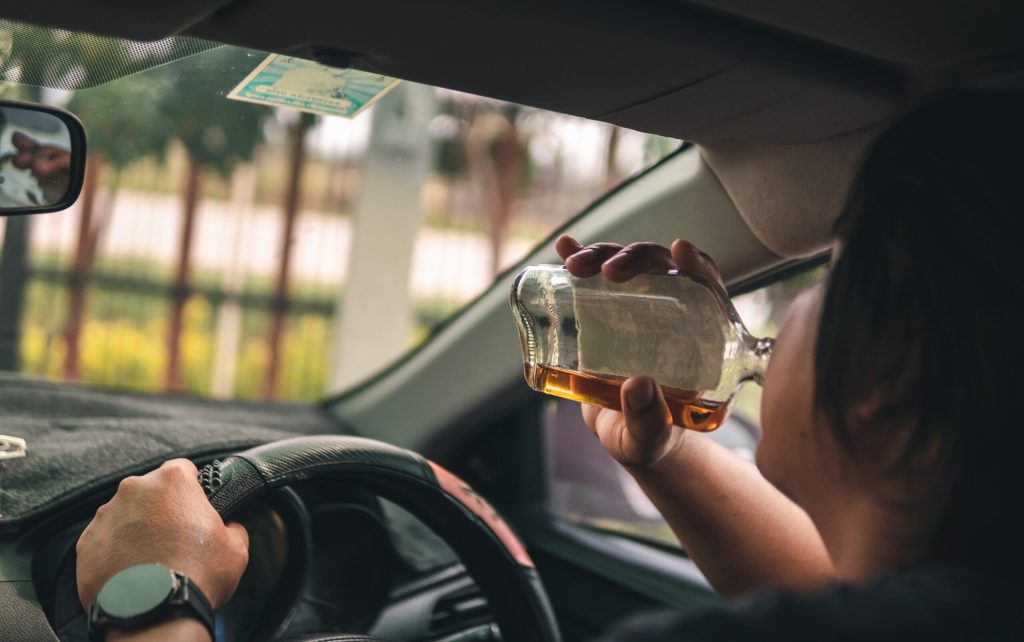
You are assigned the position of “designated driver” and during a fun night out, your friends pressure you into having a drink or two. The night is then over, and you are faced with the following dilemma:
You are under the influence of alcohol and have to drive you and your friends back home. Do you –
A) Call a sober friend and get them to drive
OR
B) Drive because you feel relatively okay
Well, it’s pretty obvious that the correct answer is option A – You should never drink and drive. However, due to your judgement being clouded, you choose to pick option B.
Whilst on your way home, you notice blue lights flashing and suddenly, a police officer signals you to pull over. The officer then approaches your vehicle, informs you that this is a mandated checkpoint and requests you to produce your driver’s license for verification and thereafter, he informs you that as per procedure, you are required to conduct a breathalyser test.
You abide by his instructions and following the test, the results read as 0.34 milligrams per 1000 millilitres. According to South African Laws, the legal limit must be less than 0.24 milligrams per 1000 millilitres.
Thus, based on the results, the officer arrests you and takes you to the nearest police station, where he immediately refers you to the nurse, based at the station, to conduct a blood test, which will be regarded as an exhibit and will be used as evidence.
The blood test will then be transported by the South African Police Service (SAPS) to a forensic chemistry lab for testing.
Once the results are released, it will then be sent to the National Prosecution Authority. According to the National Road Traffic Act 93 of 1998, specifically Section 65, sets the Blood Alcohol Concentration (BAC) limit for driving at no more than 0.05 grams per 100 millilitres of blood.
As you have contravened the law you will now be detained by the police and your rights will then be explained to you, which includes the right to remain silent and the right to legal representation. You are also entitled to be released on bail, however, depending on the circumstances, it may result in you having to wait until a court appearance in order to be released.
You will have to be brought before a Court of Law within 48 hours of being detained, where a formal application for bail can be made.
This matter will then be referred to the NPA and the normal criminal procedure will follow.
So, when you are confronted with a dilemma of whether “to drive or not to drive” under the influence, it is better to choose the latter lest you are detained for drinking and driving, which might lead you to having a criminal conviction on your records.

